Insurance Document Storage


Using off-site document storage for Insurance companies to align disaster recovery strategies.

Insurance, by its nature often involves lengthy and complex application processes, so a lot of documentation is created and required to be stored for compliance and practicality. Whilst digital transformation has made inroads into the paper-based formats, some documents (e.g. originals featuring signatures) need to be retained. Also, what about the ever-growing archive of customer information that needs to be retained in the case of claims or queries?

Space constraints in insurance offices, as well as the need to retrieve that paper-based information can be handled better and more cost effectively, by outsourcing storage and retrieval services to a third party.

Add this to the issue of disaster recovery planning and compliance, moving relevant volumes to an off-site facility (with relevant retrieval options) is a sensible strategy.

Advantages of Insurance Document Storage
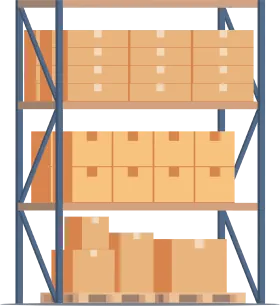
There is of course the issue of preparing archives for transport to the off-site facility, but after that, ongoing costs and time related issues are low. An off-site storage facility will normally charge a monthly fee for each stored box, plus the cost for retrieval and return of stored boxes. Services will include:

  • Secure storage of boxes of your documents: In security camera guarded, atmosphere-controlled storage facilities, with boxes of documents palletised and shrink wrapped to protect from environmental damage.
  • Optional retrieval services for documents: Based on box number, documents can be retrieved when required, and delivered back to client premises using secure courier services.
  • Safe storage of crucial documents: Original physical documents, maybe historically significant or of legal importance, require careful storage particularly if they are old or irreplaceable.

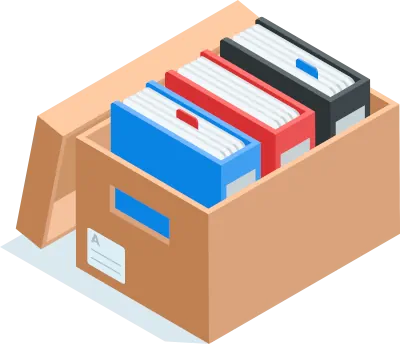
Insurance documents are securely stored within boxes

Insurance Documents We Manage

Policy Documents

Detailed documents outlining the terms, conditions, and coverage of insurance policies. These include policies for health, life, auto, home, and business insurance.

Claim Forms

Forms submitted by policyholders or beneficiaries to file a claim against an insurance policy. These forms include details about the claim, such as the event leading to the claim, the amount claimed, and supporting evidence.  

Supporting Evidence for Claims

This includes any documentation that supports the claims made by policyholders. It can include medical reports, police reports, repair estimates, photographs of damage, and more.

Correspondence

Letters, emails, and notices between the insurance company and its policyholders, claimants, regulators, and other stakeholders. This includes notifications of policy changes, premium notices, and claim status updates.

Financial Records

These include premium payment records, claim payments, accounting records, and bank statements related to the financial transactions of the insurance company.

Regulatory Compliance Documents

Documentation that demonstrates compliance with insurance regulations. This can include audits, inspection reports, licenses, and compliance reports.

Underwriting Documents

Information collected during the underwriting process, such as applications for insurance, risk assessments, and background checks.

Legal Documents

Contracts, agreements, settlements, and other legal documents related to the operation of the insurance company, including contracts with service providers and agreements with reinsurers.

Training and Internal Policies

Documents related to the training of insurance company staff, internal policies and procedures, and employee records.

Marketing and Research Documents

Market research, advertising campaigns, and policyholder feedback surveys that help in tailoring insurance products and services.

Get in Touch


If you would like further details on our document storage services, please click here for a quick quote or reach out to us on 08081 454647.

Store your insurance files safely with our Document Storage service

Other Physical Document Storage FAQs

What sort of boxes do we need to use for storage?

Boxes should be of sufficient construction for stacking on pallets and should not contain material that weighs more than 20kg for each box. We can advise clients on suitable boxes if required. We retain the right to reject boxes delivered to our facility if overweight or of poor construction.

All boxes must be marked by number by client (min 2 box ends) in order for tidy stacking and database entry. Numbering / colour-coding can be used as required by client.


Where are boxes stored?

For over 20 years we have had a separate document storage warehouse facility based near Kings Ripton, Huntingdon, which is CCTV monitored, secure, and alarmed, with intruder and fire/smoke detection. Boxes are rack mounted on pallets.

How do we handle the secure storage of documents?

We can arrange collection in bulk or in smaller quantities, of properly constructed boxes or, the client can arrange for delivery themselves.

Firstly, as boxes are stored in tiered racking in our document storage facility, clients need to use appropriate box size and construction to retain integrity, especially over a long storage period, before filling with files (paper weighs a lot!). We can provide advice on the correct specification and even arrange for the purchase of suitable boxes if required.

Next, all paper-based boxes should be labelled with the minimum requirements being the marking of box ends with the same relevant box number. A list of boxes to be collected for document archive storage should also be emailed in advance, to act as a check list on delivery.

Once received, we check the boxes in and enter the details such as bay location onto our database. We also confirm receipt and notify the client of any boxes that don't meet the agreed storage standards.

How quickly can boxes be returned from storage?

Options include a standard 48 hour turnaround from client retrieval request, or an emergency 24 hour service for more time-sensitive retrievals. Boxes will be delivered via our secure courier service.

Is there a minimum contract period?

Yes, the minimum contract period for storage is two years.

Do you provide a confidential shredding service for records that are beyond their required storage lifespan?

Yes, assuming the client can provide accurate information (i.e. advance notice of destruction dates for stored boxes). We will then add this information to our database and schedule these for confidential on-site shredding. However, we will always send a destruction order for the client to sign off at least 1 month before the scheduled destruction date.

Costs for this service are based on weight, which will be quoted on an ad-hoc basis.

Enquire today about our document storage services

Please contact me to discuss my document storage requirements

* denotes a required field